




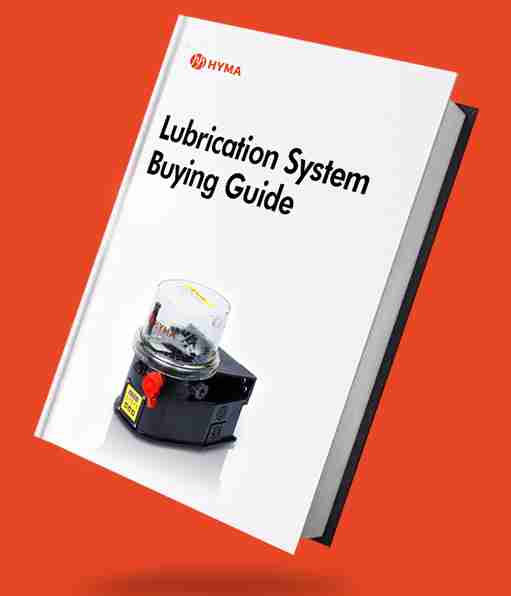



You can use HYMA Single Point Lubricator in environments with narrow space, high vibration, long-distance installation, frequent high differential pressure, etc. You will reduce maintenance costs and improve equipment reliability and service life with our automatic Single Point Lubricators.
As a trusted manufacturer, HYMA delivers high-performance Single Point Lubricators designed for effortless maintenance. Our single point automatic lubricator ensures consistent grease delivery, reducing downtime and extending equipment life. Ideal for industrial applications, HYMA’s solutions offer reliability and cost savings. For single point lubrication system distributors seeking quality, we provide OEM support and bulk supply with competitive pricing. Partner with HYMA to equip your customers with efficient, durable lubrication technology. Contact us today to discuss distribution opportunities and elevate your product lineup with industry-leading solutions.
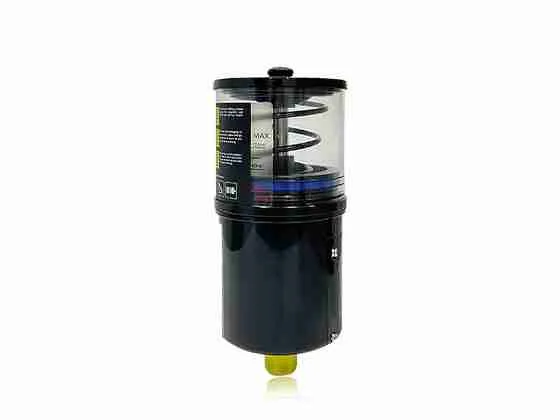
HYMA HESP-125 Single Point Lubricator is suitable for different industries lubrication.
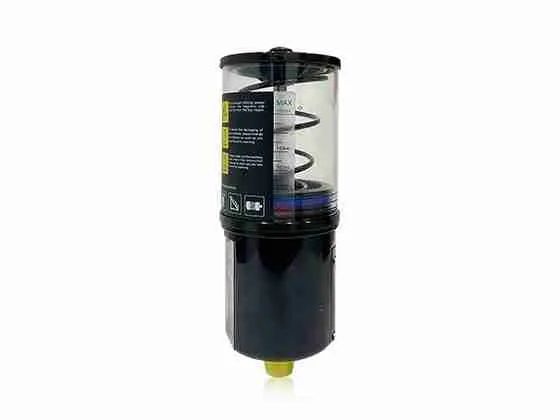
Our HESP-250 Single Point Lubricator is affordable with durable performance.

HYMA HESP-500 Single Point Lubricator made of top grade components.

HYMA can customize your Single Point Lubricator based on your working conditions.
HYMA manufacture single point automatic lubricators that combine rugged durability with smart design. Every component in our single point automatic lubrication system matters—reinforced casings withstand harsh environments, corrosion-resistant oil reservoirs prevent leaks, and high-tension springs paired with precision pistons ensure consistent operation.
Rigorous quality checks guarantee long-term performance, while lean manufacturing keeps costs competitive for distributors. Whether servicing industrial machinery or automotive systems, our solutions minimize equipment wear and downtime, helping your clients maximize productivity. Trusted by partners worldwide, we deliver value without cutting corners.
HYMA, a leading single point lubrication system supplier, provides premium single line lubricator components designed for durability and precision. Our single point automatic lubricator ensures smooth, maintenance-free operation, reducing wear and extending machinery life. As a trusted single point lubrication system distributor, we support global partners with OEM solutions and bulk supply. HYMA’s components deliver consistent performance, helping distributors meet industrial demands effortlessly. Partner with us for reliable, high-quality lubrication technology that keeps operations running seamlessly. Contact HYMA today to strengthen your product lineup.
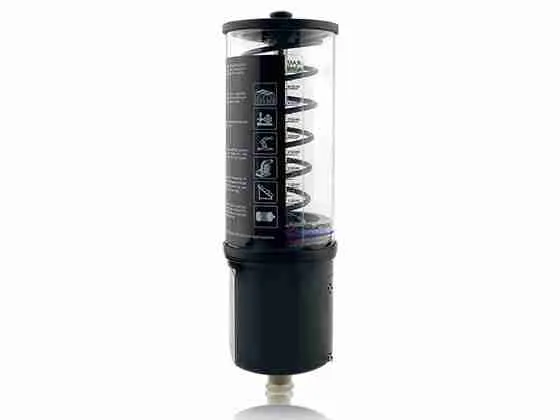
It store lubricating grease to ensure a continuous supply.

HYMA Single Point Lubricator shell can protect internal mechanical structure from dust and impurities.

Single Point Lubricator piston Promote grease flow through reciprocating motion.

It provides pressure to ensure that grease can flow out smoothly
HYMA Single Point Lubricator is suitable for wide industries from bearings to steel processing. You can save much cost to grease your machine with our Single Point Lubricators. HYMA’s Single Point Lubricator is engineered for diverse industrial applications, ensuring reliable lubrication in harsh environments. From conveyor systems to heavy machinery, our automatic lubricators minimize friction and prevent costly downtime.
HYMA supports global distributors with high-performance solutions tailored for mining, agriculture, and manufacturing sectors. Our technology delivers precise grease dispensing, enhancing equipment lifespan effortlessly. Partner with HYMA to equip your clients with durable, maintenance-free lubrication systems that boost productivity. Contact us today to explore distribution opportunities and elevate your industrial supply portfolio.

HYMA Single Point Lubricator can ensure smooth operation of bearings, reduce friction and wear.

You can use our Single Point Lubricator keep chain parts lubricated to reduce friction and noise.

HYMA Single Point Lubricator can simplify lubrication operations and improve work efficiency.

Single-point lubricators can ensure continuous oil supply to the equipment.
There are two main types of single-point lubricators: electrochemical and electromechanical.
Electrochemical single-point lubricators dispense lubricant at a controlled rate by using an internal gas generator.
The gas is created by combining two elements in a sealed chamber, creating a pressure buildup that presses against the piston and dispenses the lubricant.
Electrochemical single-point lubricators are often safe for use in hazardous locations, depending on the gases produced by the reaction.
Electromechanical single point lubricators are battery powered or powered by an external power source.
The power source drives a small motor which activates and advances a piston to dispense lubricant to a bearing or other application. These single-point lubricators can dispense grease at higher pressures and are not affected by temperature fluctuations.
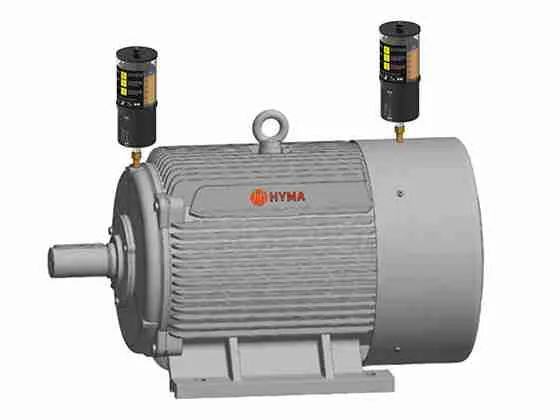
You should know the grease flow conditions before choosing single-point lubricators for your project.
Temperature
The most important factors affecting the grease flow is the temperature.
You need to confirm if your single line lubricator works in high or low temperature.
As this will decide the grease flow speed and which type of single point lubricator you will use.
Applicable scenarios and device types
You also need to know the specific machinery type and where will the SPL be used.
It is a better choice to use Single-point lubricators in restricted locations to achieve stable grease supply to lube the equipment at low cost.
Brands
It is well known big brands single line lubricator is reliable but price might be expensive.
But we still advise you to choose large brands if your budget is enough.
Otherwise, you need to find reliable supplier with more serach time.
The price range of single-point lubricators is relatively wide, ranging from $30 to $2999 in the market.
Here are the factors to impact the single line lubricators price:
Equipment Model and Specifications: The prices of single-point lubricators of different models and specifications vary greatly. Large, high-precision equipment is usually more expensive, while small, low-precision equipment is relatively cheaper.
Equipment Material and Manufacturing Process: The material and manufacturing process of the single-point lubricator will also affect its price.
High-quality materials and advanced manufacturing processes can improve the stability and durability of the equipment, but they will also increase costs.
Market Demand and Supply Situation: The market supply and demand relationship is an important factor affecting the price.
When market demand is greater than supply, prices tend to rise; conversely, when supply is greater than demand, prices may fall.
Technical Content: The technical content of the single-point lubricator will also affect its price. Products with high technical content are usually more expensive because they may have higher performance and more complex operation methods.
Brand Awareness: Single-point lubricators of well-known brands are usually more expensive because they have higher recognition and reputation in the market.
After-sales Service and Support: The after-sales service and technical support provided by some suppliers will also affect the price.
Comprehensive after-sales service and technical support may increase the overall cost of the product.

HYMA is your reliable Single Point Lubricator Manufacturer and we have our patent on the design, development of Single Line Lubricator. You will get custom solution with better technical support from HYMA. We have been in this industry with top brands around the world to develop single line, progressive lubrication system as well as custom grease pump to solve different industry lubrication problems.
As a leading Chinese manufacturer of single point automatic lubricators and single point grease lubricators, we bridge precision engineering with unbeatable value. Our single point automatic lubrication systems are crafted to European-grade standards, combining cutting-edge R&D with scalable customization—proven to withstand harsh industrial environments while delivering maintenance-free reliability. From heavy machinery to automotive fleets, our single line grease lubrication solutions minimize downtime, extend equipment life, and keep your clients operations running smoothly.
What sets us apart? It starts with our components. Reinforced polymer casings resist corrosion and impact, while high-tension springs and precision-machined pistons ensure consistent grease or oil delivery. Our single point lubrication system is designed for effortless integration, whether retrofitting older equipment or upgrading new installations. Rigorous quality control—from raw materials to final assembly—guarantees durability that rivals premium European brands, yet our lean manufacturing processes keep costs 20-30% lower, giving distributors the margin flexibility to dominate local markets.
But we’re more than a supplier; we’re a growth partner. With expert engineering teams, we adapt designs to meet regional requirements, load capacities, or environmental specs—no minimum order hurdles. For agents, we offer dedicated technical support, localized marketing kits and flexible MOQs to align with your market strategy.
Join a network of 150+ global distributors who trust us to deliver quality that sells itself. Let’s redefine what “Made in China” means, superior lubrication systems, priced to outperform. Contact us today to secure exclusive territory rights and start scaling your lubricant portfolio.
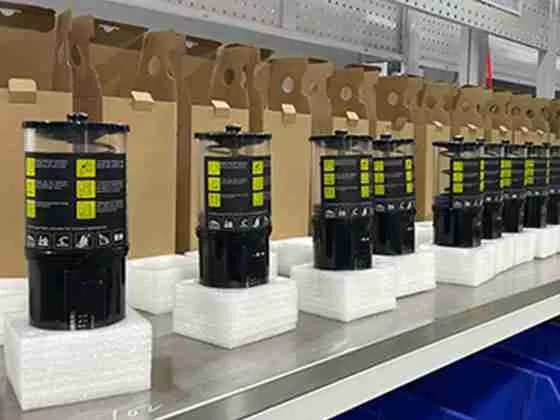
Professional and fast Single Point Lubricator assembly.

World Class Quality Inspection Equipment for precise result.
HYMA use test equipment and tools including measuring instruments, timers, etc. to inspect the Single Point Lubricator performance on Lubrication effect, oil supply stability and service life.
We evaluate the performance of single-point lubricators by comparing the lubrication effects under different parameters to check if there is any manufacturing defects.
As leading lubrication pump manufacturer, HYMA never supply low quality single line lubricators for customers. You will get quality warranty from us on the lubrication equipment.


We can deliver your Single Point Lubricator with fast express or traditional shipping, you can choose the transportation way and we will meet your desired shipping methods.
You will get your Single Point Lubricator in original status without any damage as we package it with thickened box and shockproof bubble film to avoid potential collison.
In addition that, we also attach with operation manual and packing list to let you easily install it on your machine. You can contact us if there is any question and we will give you satisfied solution upon your request.
Our single point lubricators, often called automatic grease feeders or oilers, operate on a simple, reliable principle: controlled, consistent force to deliver lubricant without external power.
The core mechanism is a sealed reservoir filled with grease or oil, pressurized by an integrated spring or a gas-generation system. This internal pressure acts as a constant energy source, gently pushing a piston or diaphragm. This forces the lubricant through a precision-engineered metering outlet at a fixed, pre-set rate—measured in grams per month or cubic centimeters per day. This “set-and-forget” design ensures a continuous, micro-dose of lubricant to the bearing or point, combating friction, wear, and contamination around the clock.
Typical Application Range:
Our lubricators are engineered for critical, often hard-to-reach or high-risk lubrication points across diverse industries, delivering significant reliability and cost benefits.
Industrial Machinery: Electric motor bearings, pump bearings, fan shafts, conveyor rollers, and gearbox auxiliary points.
Material Handling: Guide wheels, linear rails, and bearings on automated systems and cranes.
Agriculture & Construction: Bearings on harvesters, off-road equipment, and excavators exposed to dust and moisture.
Energy & Infrastructure: Critical points on wind turbine pitch/yaw systems, generator bearings, and marine equipment.
Food & Beverage: Specially designed models for NSF H1 compliant lubricants in washdown environments.
By replacing unreliable manual greasing, our single point lubricators prevent both under-lubrication (causing wear) and over-lubrication (causing heat and seal damage), extending component life by up to 80%, reducing downtime, and improving plant safety.
Engineered for resilience, our lubricators are built to perform reliably in the most demanding conditions. They are designed as a robust, sealed system to protect the lubrication process from external contamination and internal failure.
For extreme temperatures, we offer specialized models with lubricant reservoirs and internal components rated for stable operation. High-grade polymers and seals prevent cracking or degradation. Dust and moisture are kept out by a multi-layered sealing architecture, including O-rings and diaphragm barriers, ensuring the internal lubricant remains pure and the mechanism functions correctly, even in foundries or washdown areas.
To withstand high vibration common in mills, crushers, and mobile equipment, our units feature a solid-state design with no loose internal electronics, and a reinforced housing that secures all components, preventing false actuation or mechanical fatigue.
Selecting the optimal lubricator is a critical, four-step process to ensure maximum machine protection and efficiency. Correct selection prevents both costly under-lubrication and wasteful over-lubrication.
Step 1: Define the Application Parameters
Clearly identify the target component (e.g., deep groove ball bearing, linear guide, plain bushing) and its operating conditions. The key factors are:
Bearing Type & Size: Obtain the bearing’s basic dynamic load rating (C) and speed factor (n*dm value) from its datasheet.
Operating Environment: Temperature, exposure to contaminants, and vibration levels.
Desired Regreasing Interval: The planned maintenance cycle (e.g., 1, 3, 6, or 12 months).
Step 2: Calculate the Required Dosage (Grams/Month)
Use the established industry formula to determine the precise grease demand:
G = 0.005 * D * B
Where:
G = Grease quantity in grams per month
D = Bearing outside diameter (mm)
B = Bearing total width (mm)
For high-speed (n*dm > 500,000) or high-temperature (>70°C) applications, multiply the result by a safety factor (typically 1.5 to 2.0).
Step 3: Choose the Lubricator Technology
Match the mechanism to your application needs:
Spring-Driven Models: Ideal for standard industrial applications with consistent temperatures. They offer excellent cost efficiency and reliability.
Gas-Driven (Electrochemical) Models: Superior for environments with extreme temperature fluctuations, as their discharge rate is less sensitive to viscosity changes. Also preferred for high-vibration settings.
Oil Lubricators: Select for high-speed spindle bearings or components requiring oil mist/air-oil systems.
Step 4: Finalize Model and Capacity
With the calculated monthly dosage (G) and desired interval, determine the total grease requirement. For example, a 3-month interval requires a lubricator with a capacity of G * 3. Select a model from our range where the output rate matches your calculated (G) and the reservoir volume meets your total capacity need.
Proper installation is crucial for optimal performance, longevity, and safety of your single point lubricator. For complex applications, refer to our detailed Installation Guide or contact our technical support team for specific recommendations.
Proper installation maximizes your return on investment by ensuring precise, maintenance-free lubrication for the entire duty cycle.
Selecting a reliable supplier from China for Single Point Lubricators depends significantly on your due diligence, but the answer is yes – provided you partner with a manufacturer that demonstrates proven expertise and a commitment to international standards. Here is what to prioritize for assured reliability:
Key Indicators of a Reliable Supplier:
Certifications & Quality Systems: Look for suppliers with ISO 9001 certification, RoHS compliance, and product-specific testing reports. Reputable manufacturers invest in standardized production and rigorous quality control to ensure consistent performance and material safety.
Technical Expertise & Customization: A reliable partner offers in-house engineering support, provides detailed technical documentation, and can tailor products (OEM/ODM) to your specific requirements—signifying deep product knowledge rather than mere assembly capability.
Proven Track Record: Examine their export history, client portfolio (especially in demanding industries), and request case studies or references. Long-term partnerships with international distributors or major end-users are a strong reliability indicator.
Transparent Communication & Support: They should provide clear commercial terms, professional export documentation, and responsive after-sales support, including technical guidance and a defined warranty policy.
By verifying these aspects, you can confidently engage a Chinese supplier that delivers not only cost advantages but also dependable product quality and supply chain stability, minimizing risk for your operations.
A single point lubricator is a self-contained device designed to deliver a precise, metered amount of lubricant (grease or oil) to a single lubrication point—usually a bearing, motor, or conveyor—over a set period. Unlike manual greasing, which relies on a technician using a grease gun at specific intervals, these units provide “micro-dosing” 24/7, ensuring the equipment is always in an optimal state of lubrication.
For beginners, the leap from a manual grease gun to a single point lubricator is transformative. Manual lubrication is often a “feast or famine” cycle. A technician might pump a large volume of grease into a bearing once a week. This creates a spike in internal pressure and temperature (over-lubrication), followed by a gradual decline until the bearing runs dry (under-lubrication). Both extremes lead to premature failure. By installing a single point lubricator, you eliminate the human error factor. You no longer have to worry about missing a lubrication point in a hard-to-reach area or a dangerous location. For a maintenance department, this translates to hundreds of man-hours saved annually.
Instead of spending time climbing ladders to pump grease, technicians can focus on high-value predictive maintenance tasks. Furthermore, because the system is sealed, it prevents contaminants like dust, moisture, and grit from entering the bearing, which is the leading cause of bearing wear in industrial environments.
Selecting the discharge period for a single point lubricator involves calculating the grease requirement of the bearing based on its size (bore diameter), speed (RPM), and operating environment. Most units offer adjustable settings ranging from 1 month to 12 months. A common starting point is to check the bearing manufacturer’s manual for the “daily grease requirement” and set the lubricator’s dial to match that volume.
For someone new to the single point lubricator, the “set it and forget it” nature of the device is its biggest selling point, but the “setting” part requires precision. If you set the period too short (e.g., 1 month), you might over-pressurize the seals; too long (e.g., 12 months), and the bearing might starve. Factors such as high ambient heat or heavy vibration usually require a faster discharge rate because grease tends to bleed or degrade faster under stress.
For distributors, being able to provide a “Lubrication Calculation Table” is a massive value-add. You aren’t just selling a plastic cup of grease; you are selling a reliability solution. When transitioning from premium brands like SKF, ensure that the Chinese “alternative” units have clear, legible dials or digital interfaces. Beginners often prefer electromechanical units for this reason—they offer a steady, predictable discharge rate that is unaffected by temperature, whereas older gas-driven units might speed up in the summer and slow down in the winter.
Yes, most modern single point lubricator units—especially electromechanical and high-quality gas-driven versions—can be mounted in any orientation. Because these units are pressurized (either by chemical gas or a mechanical piston), they do not rely on gravity to move the grease. This allows them to be installed upside down, sideways, or at an angle depending on the spatial constraints of the machinery.
This flexibility is a key advantage of the single point lubricator over traditional oilers. In complex machinery, the lubrication port is often tucked away in a corner where a grease gun cannot reach. Being able to mount a lubricator horizontally is a lifesaver for technicians. However, there is a caveat for beginners: while the unit can be mounted in any direction, you must ensure that there are no air pockets in the mounting hardware or the grease line.
If you are mounting the single point lubricator remotely (connected by a hose), the hose must be pre-filled with the same grease found in the lubricator. For distributors, it is important to note that while premium brands like Graco are famous for their robust mounting, many Chinese “alternative” brands now use high-strength reinforced plastics and vibration-resistant threads that perform equally well in vertical orientations on high-vibration equipment like vibrating screens or crushers.
Monitoring depends on the model. A basic single point lubricator usually has a transparent or translucent housing, allowing you to visually track the position of the internal piston. More advanced electromechanical models feature integrated LED warning lights (typically green for normal, red for empty or error) and can sometimes be integrated into a factory’s PLC (Programmable Logic Controller) for remote monitoring.
This is a “peace of mind” question. The biggest fear for a maintenance manager switching to a single point lubricator is that the unit will fail silently, leading to a burnt-out bearing. If a line is blocked by hardened old grease, a gas-driven unit may simply stop moving without any outward sign. This is why many distributors recommend electromechanical alternatives.
These units have “back-pressure” sensors. If the single point lubricator encounters a blockage it cannot overcome, the motor will stop and trigger a red flashing LED. For the “beginner” user, this visual cue is essential. For the distributor, selling units with clear “status at a glance” features is the best way to compete with brands like Perma or SKF. It proves that the Chinese alternative is not just a “dumb” plastic cup, but a smart maintenance tool.
High-quality single point lubricator units are designed with an IP65 or higher rating, meaning they are “dust-tight” and protected against water jets from any angle. This makes them suitable for use in food processing (wash-down areas), mining (heavy dust), and outdoor conveyor systems exposed to rain and snow.
In industries like cement, mining, or marine, the environment is the enemy. A single point lubricator must be able to survive being covered in grit or sprayed with a hose. Beginners should always look for the IP rating in the technical datasheet. For distributors, this is a critical selling point when offering a “Chinese alternative” to Graco or SKF. Many high-end Chinese manufacturers now use ultrasonic welding for their housings and high-performance O-rings to ensure the internal electronics and grease remain pristine. If you are selling to a food-grade facility, you also need to ensure the plastic housing is resistant to the cleaning chemicals used in that industry. A robust single point lubricator doesn’t just deliver grease; it acts as a fortress for the lubrication point, sealing out the very contaminants that cause 50% of all bearing failures.